-
Embracing Being Underestimated

One of the moments that sticks with me today is when my first grade teacher asked everyone in my class to individually recite the days of the week. At this time, I didn’t know the days of the week, and yes, I know it seems odd for me not to know the days of the week in first grade, but I had genuinely never learned them. So while every other student in my class followed our teacher’s instructions by reciting them, I started to panic and stress over how I was going to confess my lack of basic knowledge. The moment it was my turn, I awkwardly looked around and could feel the judgmental glares from the other students. I looked into my teacher’s eyes to see if she would help me out, but not even she could imagine a first grader not knowing this. I then said, “I forgot…” hoping everyone would buy the excuse; however, instead, everyone in my class started laughing at me. After this day, my first-grade teacher started to treat me differently. She began constantly hovering over me as I would do the class activities, and she would not call on me during class at all. The next week, she prompted us to again recite the days of the week, but this time in front of the entire class, she said, “Aanya, don’t worry, you don’t have to.” As soon as she said that, I wanted to go home. I was embarrassed and was once again being stared at by my whole class, and the worst part was that this time I actually memorized the days of the week. In this situation, I was treated as if I was not as smart as every other person in the room. Despite my teacher not having the intention to single me out because she thought I would have still not learned the days of the week by then, I was hurt and felt that I wasn’t good enough to be in the class.
Being underestimated is something I have reconciled myself with and, for the most part, have come to expect. The number of times people have told me, “I never realized school meant so much to you,” “I bet you just want to major in fashion,” “Before I met you, I assumed you were kind of stupid…” These quotes have been repeatedly said to me several times, and it infuriates me that I have to constantly be viewed as ditsy. Oftentimes, when I try to express my opinions on things, I am ignored, but when someone who is viewed as more knowledgeable expresses their opinions, they are praised for “speaking up.” Anyone who has ever gone through similar experiences will know it is hard to feel good about yourself when others underestimate you. That being said, I recently discovered how to empower it.
When people underestimate you, they don’t believe in what you are capable of and, ideally, don’t believe in you as a person. Instead of taking this to heart, I have learned that there is a much better solution: proving them wrong. When people treat me like I lack intelligence and am less than them, I now feel motivated to show them that I am not the person they are assuming I am. I know my own worth and am confident enough to acknowledge that I am a hardworking and diligent individual who will not let anyone determine my capabilities. But of course, it is never good to be overconfident in yourself, and you can’t prove others’ false assumptions wrong if they are right. Which is why I put working hard for myself over receiving validation from anyone else. There is nothing that surprises those who underestimated me more than when they see that I do, in fact, work hard.
Realistically, I know that in the future I will find myself in situations where I am underestimated by others. Nevertheless, instead of letting people’s negative assumptions affect me, I will use their judgments as a way to surprise them.
-
AI’s Effect on Social Media and Teens
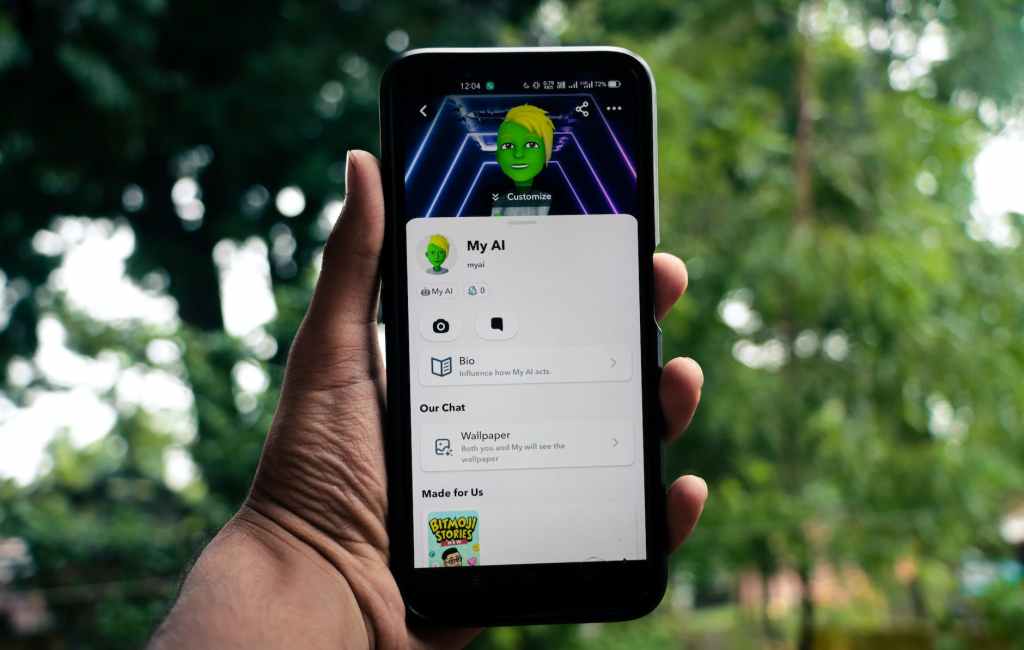
The integration of artificial intelligence (AI) into social media platforms has revolutionized the way we communicate and share moments. One such platform that has embraced AI technology is Snapchat, a popular app among teenagers known for its ephemeral nature and augmented reality features. While AI advancements bring numerous benefits, it’s essential to delve into their potential effects on mental health, particularly among teenagers, who are vulnerable to the influences of technology.
Recently in 2023, AI has been taking over social media. With the release of ChatGPT in November of 2022, other apps and platforms have taken use of the AI module and added this feature to their apps. Snapchat AI being one of them. Snapchat AI became public to all users in April and before that was only available to Snapchat premium users. I remember the day I opened my phone and saw a pink figure pinned on my chats titled “My AI.” I was eager and curious to see how the Snapchat AI would work. Snapchat suggested using the AI for “asking questions about anything” and many turned to it to seek mental health advice.
In addition to just serving as a chat companion, the bot can also have some practical purposes, such as offering gift-buying advice, planning trips, suggesting recipes and answering trivia questions, according to Snap. However, a lot of teens have turned to this bot for mental health support.
This article explores the multifaceted impact of Snapchat AI on the mental well-being of adolescents.
Snapchat is an extremely popular social media platform used by young people to engage with each other through sharing stories, direct messages, and multimedia photo and video content. It’s the app I use for communicating with my friends. Recently it has introduced a new Artificial Intelligence (AI) chatbot called “My AI” designed to help users with various tasks through their messaging section in the Snapchat app. While this new feature can be helpful, there are some potential risks to young people who use this feature.
Snapchat’s incorporation of AI technology has been extensive, ranging from its creative filters and lenses to the personalized content displayed on users’ feeds. Through facial recognition, machine learning algorithms, and data analysis, Snapchat AI tailors content to each user’s preferences, leading to increased engagement and prolonged app usage. However, the consequences of these algorithms on mental health warrant careful consideration.
There are some positive effects of Snapchat AI powered filters and lenses that encourage self-expression and creativity among teenagers. These features provide an outlet for artistic expression, enabling users to experiment with their identity and share unique content.
There is a connection and socialization since the platform enhances social connections by allowing teenagers to share moments in real time. AI-driven content curation can help users discover shared interests, promoting a sense of belonging and connection within peer groups.
Snapchat’s playful AI features offer entertainment and serve as a distraction from daily stressors. By engaging with filters and AR effects, teenagers can temporarily escape their worries, similar to the enjoyment derived from games and other recreational activities.
While there are positive effects, there are also negative effects.
1. Idealized Self-Image: The constant exposure to augmented reality filters can lead to a skewed perception of beauty and self-worth. The desire to present oneself using flawless AI-altered appearances may contribute to body dissatisfaction and low self-esteem.
2. Comparative Social Pressure: Snapchat AI’s content curation might inadvertently amplify social comparison. Teenagers are exposed to meticulously curated content, potentially leading to feelings of inadequacy as they compare their lives to the idealized versions presented on the platform.
3. Validation-Seeking Behavior: The instant gratification of receiving likes, comments, and views on Snapchat can foster a reliance on external validation. Teenagers might become preoccupied with seeking online approval, potentially impacting their self-worth and emotional well-being.
4. Fear of Missing Out (FOMO): Snapchat’s AI-driven content selection could intensify the fear of missing out, a common phenomenon among teenagers. The app’s algorithmic presentation of engaging content might perpetuate the feeling that everyone else is having more exciting experiences.
Mitigating Potential Harm
1. Digital Literacy Education: Schools, parents, and guardians can play a pivotal role in educating teenagers about the AI algorithms used in social media platforms. Understanding how these algorithms work can empower teens to critically evaluate the content they consume.
2. Promoting Authenticity: Encouraging users to share unfiltered moments can help counteract the pressure to maintain an idealized online persona. Emphasizing the value of authenticity can foster healthier online interactions.
3. Balanced Usage: Striking a balance between online and offline activities is crucial. Encouraging teenagers to engage in hobbies, physical activities, and face-to-face interactions can reduce the negative effects of excessive social media use.
Snapchat’s AI-driven features offer both positive and negative impacts on teenagers’ mental health. While the platform facilitates self-expression and connection, it also introduces challenges such as distorted self-perception and validation-seeking behaviors. To harness the benefits of AI while minimizing harm, a collaborative effort involving platform developers, educators, parents, and teenagers themselves is necessary. By promoting digital literacy, authenticity, and balanced usage, we can create an environment where teenagers can enjoy the benefits of technology while safeguarding their mental well-being.
-
Changing the Implications of Change

Change is inevitable: While it may seem easier to stay in the comfort of a well-kept routine, change will eventually prevail. A lot of the time, change comes at the most unexpected times. From something as small as your schedule, to something as major as moving homes, getting accustomed to change is often difficult; life felt so much simpler before, afterall! In short, we get used to what was, and attached to traditions. Turning away from change doesn’t help; the world is constantly changing around us, whether we like it or not.
I realized this, when I went through one of the biggest and unexpected changes in October last year, which was losing my friend group. The close tight-knit bonds we had with each other was something I didn’t realize I would lose so soon. I had spent so much time texting and hanging out with them that they were a big part of who I was as a person and when I lost them it felt like I lost a huge part of myself. I wasn’t sure how I would recover and move forward from this change and then I realised that there are some things that we just can’t control, no matter how hard we try. Constantly worrying and being anxious over a situation that can’t be controlled will not change anything. So for me in that situation I decided to remind myself that it was not my fault and the best thing I could do for myself was try and get past this fallout. Sometimes, it feels natural to fall into a routine of obsessing and overthinking, even when there is no reason to keep on going with that endless cycle.
However, the constant overthinking can take us away from the present. Rather than staying in the moment, you can end up spending too much time in your own head. It’s difficult to stop worrying about change, especially when dealing with a problem you can’t completely control. But letting the situation play itself out can have a very positive effect on mental health.
Even though I was deeply impacted, I still continued to try my hardest in school and create closer bonds with new people. I also practiced taking care of myself and taking the time to reflect on the situation. Luckily for me I was able to form new friendships with people who supported me through out this process. Of course, it is not easy to sit back and put anxiety on hold. Still, practicing self-care and allowing yourself to look back and move forward are the best ways to help you cope with change. Another important thing to remember is that you are never alone. It is always important to remember that you can talk to somebody. Talking to a close friend/ family member/ or trusted adult, can really help you get the support you need in a stressful situation. Even when change seems like an impossible obstacle to overcome, there is always a way through. Coping with anxiety and stress is not an easy task, but prioritizing your mental health will help you grow as a person and welcome change.
-
4 Things I’d tell my Middle School Self
I turned 16 last week and I thought I would take this blog post as an opportunity to reminisce. I found my middle school journal yesterday and I think it is safe to say I was very different. I’ve experienced a lot of growth, as a person and a student, so here are four things I would tell my middle school self:
- Create different friend groups
Hollywood movies have made us think that having a group of friends should be all you need. Yes, I did have that one group, and gave it so much importance that it became part of my identity. Losing that group of friends was hard by eye opening. I realized that decisions were never made as a single individual, but rather by the group. If you made your own decision, it wasn’t received well, turning the environment sour. Afterall, we’re all going through puberty and learning to be young adults; this can make things cantankerous and toxic as a result of lacking maturity among teenagers. Different friend groups will help you cater to different aspects of yourself so don’t be afraid to branch out.
- Competition is healthy, but not everything
Humans thrive off competition, it’s true. The problem that then emerges is that of unhealthy competition: friendships break, people cheat, and lie. In school, the most common question is, “What’s your GPA?” While it is everyone’s goal to get the highest score, it’s more important to get the highest score you can and you will be proud of. There will always be someone ahead, and someone behind. Compete to push yourself, but be happy for those who might excel more. Letting others’ success impact you will reverse your positive approach to competition. Being successful in school goes beyond the highest grades.
- High School is not High School Musical
The glitz and glamor of perfectly dressed high schoolers does not exist. People will not break into dance, they will not always have perfect hair, eyebrows, or outfits. In fact, looks are not everything. This is high school, not a beauty pageant. It’s crucial for us to remember that real life is not reel life.
- You’re not expected to know what you want
I have gone through about four different stages over my school career thus far. From drawing, to photography, to english, and psychology, my interests are always changing. School is the best place to explore your interests with the guidance of your teachers. Having found my joy for writing, I started this very blog that has now become my exploration of mental health and its manifestations in our minds. Keep an open mind for there is so much to explore and experience!
-
My Experience at EmpowHER India
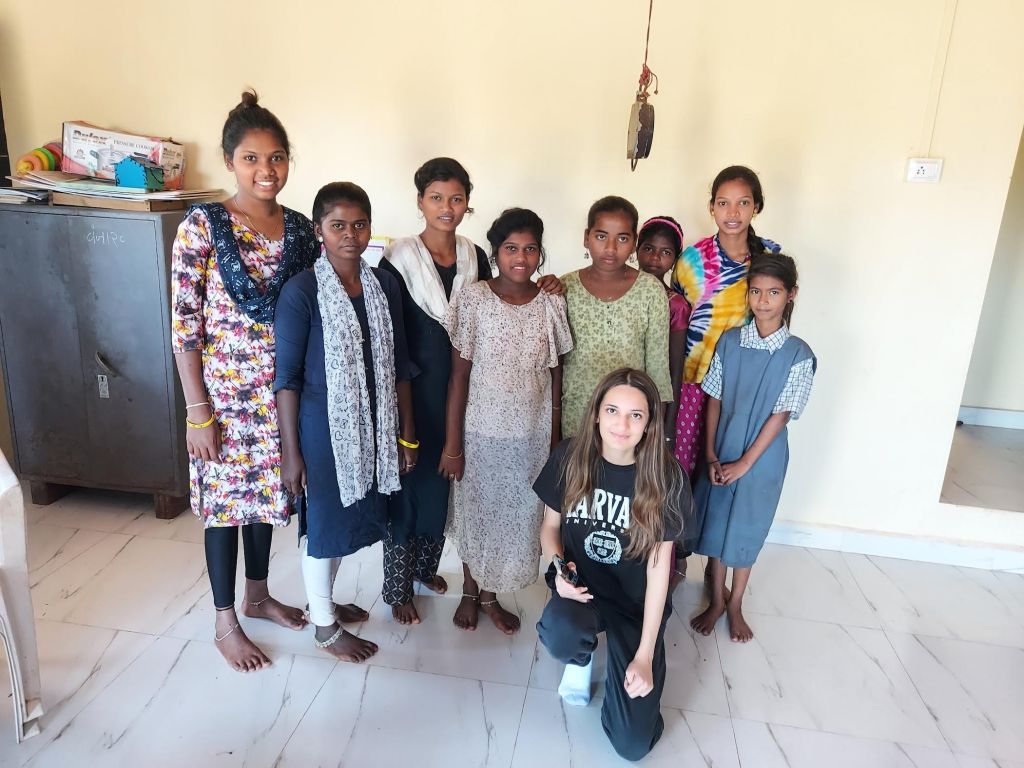
This winter break, I was fortunate enough to start a two-week internship at empowHER India. An NGO that empowers women and adolescent girls in India and has successfully been able to transform communities by creating an equitable society. As a third-culture kid who has spent her entire life living abroad, away from my home country, my knowledge of the lack of women’s rights in some parts of India was very limited. So getting this opportunity to learn and be able to help these communities has been a very humbling experience.
On the first day of my internship at empowHER India, I was welcomed kindly by the empowHER team and educated through a slideshow on what the organization does. I was introduced to empowHER’s two programs: Setu, which specializes in educating adolescent girls living in rural parts of India on financial literacy and vocational skills, and WaSH, which makes sure schools in rural villages have proper sanitation.EmpowHER’s programs are carried out in approximately 70 villages. Setu interested me, since I myself, at 15 years old, fall under the category of an adolescent girl. It saddened me how many of these rural girls missed out on a proper childhood as many of them were given countless adult-level responsibilities at a young age. After learning about empowHER India through the presentation, I was determined and motivated to complete all of my tasks to the best of my ability, since the organization’s cause was something I truly cared about, and I was very keen to do whatever I could to make a difference.
Throughout this internship, I was able to do a variety of different things. During my first few days there, I was asked to help out in the marketing department of the organization. This involved going through empowHER’s Instagram posts and editing the captions to make them up to date. I was also asked to create a list of influencers in Mumbai, who could help promote the organization. I did this by taking the time to research and discover influencers in Mumbai who matched our profile. In addition to the marketing aspect, I helped the WaSH team by creating a poster to show the difference between a clean toilet and a dirty toilet through two different visuals. Furthermore, I familiarized myself with the organization’s operations in Karjat, which is a small undeveloped town on the outskirts of Mumbai. This is where empowHER India’s main office is and where they run the Setu and WaSH services. I went through multiple files filled with photos of girls who were benefiting from empowHER’s services in Karjat. After seeing these photos and seeing the joy empowHER India brought to the girls’ faces I was eager to go see the villages in Karjat. I then requested to go see the villages. Going to Karjat was an eye-opener for me, because I had never experienced going to a real village since I have lived in modern cities for most of my life. It was very heartwarming to meet the village girls and to find out how empowHER India’s services have benefited them by making them more independent and educating them.
My overall experience at empowHER India has been wonderful, and I am full of gratitude to be able to get the chance to be a part of something that has educated so many girls in villages all over India. I will continue supporting the organization while I am in Singapore and will never forget my time in empowHER India.
-
The Death of Mahsa Amini
Mahsa Amini was a 22-year-old woman from the western city of Saqqez located in Iran’s Kurdistan province. She was taken into custody for breaking the Iranian law which requires women to cover their hair with a headscarf or a hijab. While on the way to the detention centre she was tortured in the van causing her to have a heart attack and brain seizure at the police station. Her death has proven the lack of women’s rights in the middle east and caused a series of protests against the Iranian government.
When I first read about Amini’s death through a reposted Instagram story, I thought to myself, why today in 2022 is it still so hard to be a woman? Roe vs Wade being overturned and the death of Mahsa Amini are both recent events that prove how fragile women’s right to their own body continue to be. While Amini’s death sparked the protests in Iran, the roots of the lack of women’s rights in Iran stretch back decades. Women’s rights in Iran have faced a lot of changes, with new government rulings, laws enforcing women’s rights were placed, removed, and changed overtime. At this time, the most known law that limits women’s rights to their bodies in Iran is the dress code requirement, which was a law adopted four years after Iran’s Islamic Revolution. The law states that all women regardless of faith or nationality, must conceal their hair with a headscarf in public. Women in Iran have heavily protested against this law and protests drastically increased after many women were angered at the drastic cause for Amini’s death. Another heavily protested topic regarding women’s rights has been the “my body my choice” campaign. Which is a feminist slogan used in several countries. Whether it has to do with getting an abortion or being forced to wear a hijab, women still have to face many issues surrounding body autonomy.
Women’s rights is still a threat all around the world in undeveloped countries like Iran and even in developed countries like the US. This has been an ongoing issue that unfortunately is still something we have to think about today and as a young feminist I question what is being done to improve women’s rights in 2022? After doing some research I found many international organizations fighting for women’s rights such as, UN Women, Center for Reproductive Rights, Womankind Worldwide, and International Alliance of Women. These organizations each are advocating for a feminist future, where women have the right to their own bodies and are treated equally. My hope is that by the time I’m an adult, laws limiting women will no longer exist and the young feminists today will grow up making an impact on this world.
-
Covid’s Impact on the Economy
This summer I got the chance to go back to California after five years. Before going, I was curious how different the state was since the last time I went and wanted to see how COVID impacted California. To my surprise, California was pretty much exactly how I remembered it, and the only change was the extent of poverty I saw. I realized many people had lost their jobs due to the COVID-19 Pandemic. One of the times I witnessed poverty was when my mom and I went to a restaurant in Santa Monica and saw a homeless man pulling out food from the trash can close to where we were sitting I remember wondering why nobody else at the restaurant seemed to be bothered by it. To me, seeing a homeless person so close to me felt so strange and so rare. Looking back at this moment, I now understand why nobody else seemed to care, and that was because they were used to it.
I’ve lived in Singapore for 11 years, and seeing poverty here would be considered an unusual encounter. The US has the second-highest rate of poverty among rich countries, while Singapore currently ranks the 26th most income disparate. COVID 19 impacted poverty in the US harder than in Singapore, as unemployment soared in the US causing their economy to suffer. While Singapore’s economy did suffer like most countries during the pandemic, the government was able to control this by introducing incentives and putting money into the economy.
In order to understand how Singapore did a better job of recovering from the pandemic versus other countries like the US, I decided to research more.
I found that the Gross Domestic Product (GDP) which is a measure of the value of the goods and services made in a country and is an indicator of the economic health of a country is an easy way to understand how well a country did during a period.
The US economy which had been on a record growth until 2019, experienced two consecutive periods of Gross Domestic Product (GDP) decline during COVID and also recorded its highest drop of 9.1% in its GDP in the second quarter of 2020 which has not happened since 1941. This shows that the impact of COVID 19 on the US economy was severe.
The US also lost 9.6 million jobs due to COVID as compared to 2.6 million job losses in the European Union (EU) which has a larger population of 100 million people compared to the US.
It is also estimated that around 24 million Americans experienced hunger and 6 million feared being evicted from their homes.
On the other hand, Singapore’s recovery from COVID-19 was more rapid as its GDP grew to 7.6% in 2021 compared to a decline of 4.14% in 2020. Whilst Singapore also saw a significant increase in job losses to 196,400 as compared to its population of around 5.5 million, the recovery was much quicker due to the effective vaccination program of the government that resulted in almost 92% of the population being vaccinated compared to 67% of the US population. This allowed the government to quickly reopen the economy to allow foreign visitors, tourists to travel to promote tourism and also to further popularize Singapore as an important country in Asia for business.
This demonstrates that strong government controls and a higher vaccination rate is important to reduce the impact of a pandemic on an economy that results in job losses, poverty and homelessness. -
Social Media’s Impact on the New Generation
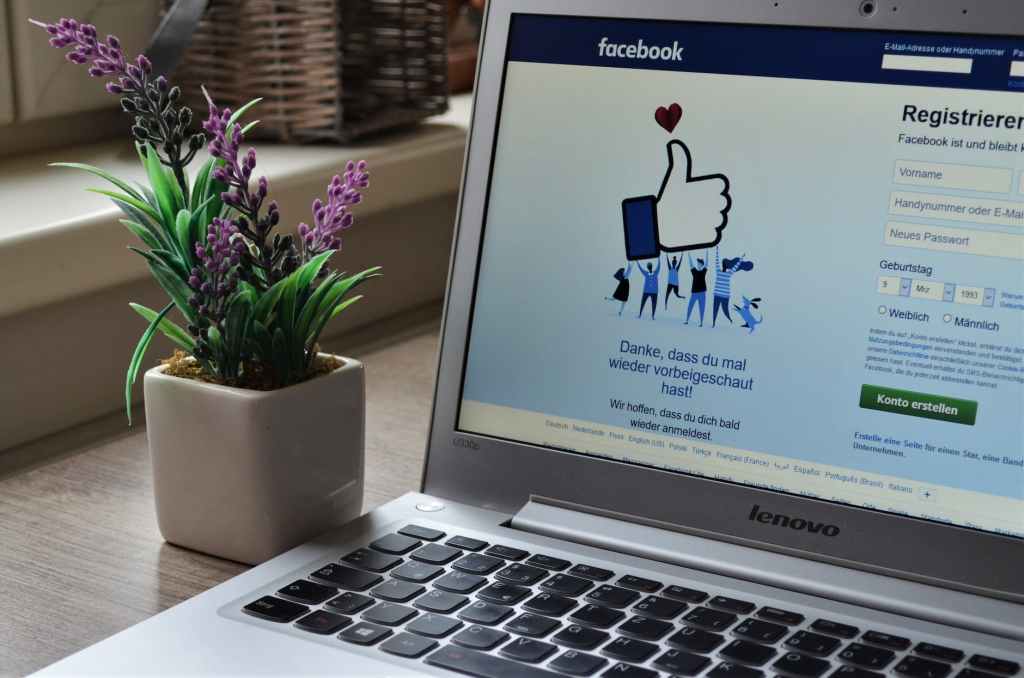
Social media has created unrealistic beauty standards that have led to low self esteem in teenagers today. The results of a survey conducted by the Royal Society for Public Health asking 14-24 year olds in the UK how social media impacted their well being proved that popular social media platforms lead to an increase of depression and anxiety in teens. “Editing apps such as FaceTune—which saw usage increase by 20% at the beginning of the pandemic and has over 1 million edited images exported daily—allow users to smooth, shrink and sharpen their way to perfection” ( Faibes, From ‘Instagram Face’ To ‘Snapchat Dysmorphia’: How Beauty Filters Are Changing The Way We See Ourselves). Apps like Facetune are commonly used by celebrities and influencers when posting on social media. When an insecure teenager scrolls on social media and only sees heavily photoshopped images of flawless people in their twenties, it’s hard for them to not compare their body to the body they see on the screen and wonder why they don’t look like that. Seeing photos of flawless people on our feed everyday has promoted unrealistic beauty expectations for teenagers. When I used to scroll on TikTok or Instagram I often found myself feeling disappointed when I realized I didn’t look like the girls who get over a million likes for just being pretty. But after distancing myself from social media and realizing that it wasn’t healthy to compare the body of a 15 year old girl who was still growing to the body of a model in her 20s , I found myself feeling more content with my appearance. 40% of teenagers said images on social media had caused them to worry about body image (Mental Health Foundation). Teenage girls have become more insecure now than ever, due to the unrealistic beauty standards social media has created. Have you ever told yourself you’re only going to go on your phone for five minutes but before you know it, it’s been an hour? Do you find yourself delaying tasks to look at your phone? Ever questioned why it is so difficult for you to put your phone down? Social media apps are designed for you to never want to leave them. So no, Instagram sending you four different notifications after you haven’t been on it for thirty minutes isn’t a coincidence. Social media apps use “the dopamine effect” which is, “our brain’s way of recording what’s worth doing again” (Brown, Trapped – the secret ways social media is built to be addictive). Dopamine is released in our brain after positive experiences such as receiving a good grade or taking a bite out of delicious food. Having a positive experience on social media such as receiving likes or seeing a funny video causes dopamine to release in our brains, making us enjoy the feeling of checking social media and wanting to do it more (Trapped – the secret ways social media is built to be addictive). This is one of the ways social media apps get us always wanting to be on our phone. So how can anyone not be addicted to social media when these apps are literally designed for us to constantly be on them? There isn’t actually a lot of complexity to this answer, the main way is to keep a life outside of social media. Unfortunately, most of the new generation has grown up on social media making them attached to their phones and nearly impossible for them to imagine a life without it.
-
Nowhere Man Analysis
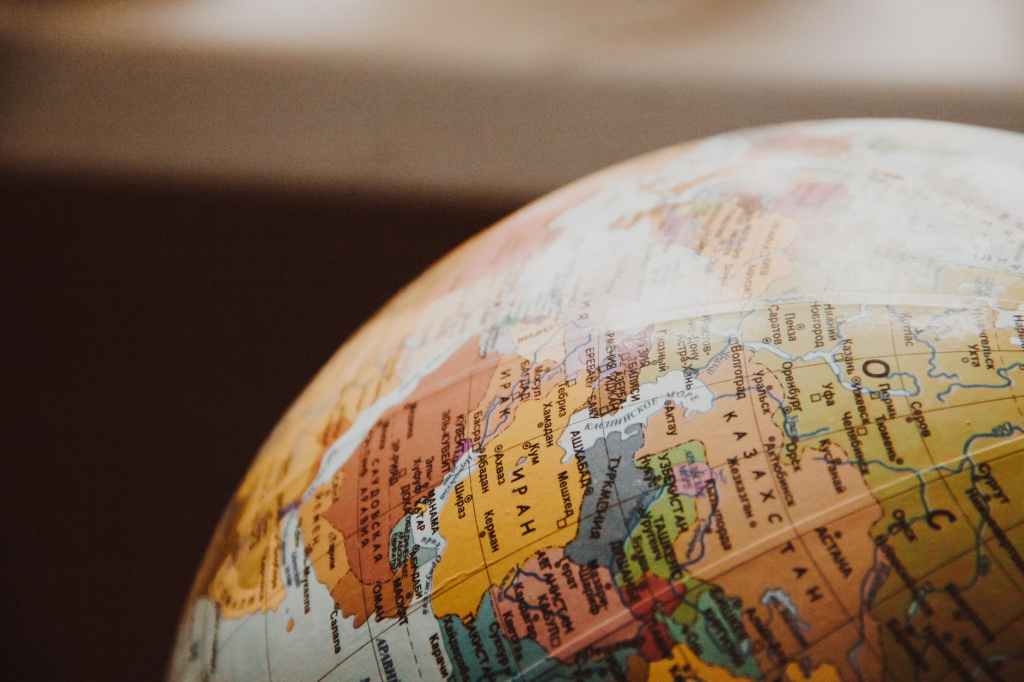
In English class at school, we read an essay titled “Nowhere Man,” written by Pico Iyer in 1997. The essay centered around the author’s experience of being a third-culture kid and feeling indifferent during a time where there weren’t many third-culture kids. I agree with Iyer’s statement, but I do believe this isn’t always the case for everyone. The idea of not having a place to call home, which was the main topic of “Nowhere Man”, is something I can heavily relate to. I was born in the US but moved to Singapore when I was two and have been going to American/international schools my whole life. I identify as Indian since both of my parents are from India, but I myself have never lived there and often feel like a foreigner when I visit India. A line that really stuck with me in the essay was, “…, the America where I am registered as an “alien,” and the almost univisted India that people tell me is my home.” As an Indian-American living in a foreign country, I do often feel like an outsider due to the fact that there are only a few parts of Indian culture that I’ve been raised with. Though I relate to Iyer’s statement, I understand why many other third-culture kids do not. When this essay was written, it was 1997, and at that time, being a third-culture kid was rare. It’s been 25 years and it’s estimated that there are around 220 million third-culture kids in the world. Iyer clearly wasn’t surrounded by many people like him, and this is what caused him to feel indifferent. Iyer proves he feels mentally homeless, and in 1997, a time where social media barely existed, this feeling is understandable. Like I mentioned before, I often feel like an outsider when visiting countries like India. However, now with social media, it has become so much easier to identify with the rest of the world. Social media has helped me stay connected with my family overseas through seeing what’s going on in their lives on Instagram and being able to contact them through Whatsapp group chats. I also have the advantage of going to school with mostly third-culture kids whom I can relate to in some aspects. Recently with Netflix shows like Never Have I Ever, Indian-American third-culture kids are getting more representation. These advantages have made it easier for me to feel a part of a society where not having one designated home is normal. Overall, I support Iyer’s statement, although only to a certain extent since I strongly believe times have changed.
-
Getting ‘Too” Attached to Netflix
As a kid, I didn’t care what was on TV, as long as it was entertaining enough for me, which was most shows on Disney Channel and Nickelodeon. But now that I’m older, I have a stronger preference for what I’m watching, which is why I, and most people, prefer Netflix instead of cable TV. During the COVID-19 Lockdown, many teenagers, myself included, resorted to Netflix as a source of entertainment and comfort during such a hard time. Netflix has dozens of different genres to explore, but I’ve personally always had a preference for teen-focused shows. This is mainly because the characters in these shows are put in scenarios I can relate to. For me, there is not a feeling more heartening than watching your favorite characters go through something you’ve already experienced. However, some people are the opposite and prefer to watch shows they can’t relate to, simply to enter into a somewhat false reality. The idea of teens using “Netflix for therapy” has become wildly popular. Teenagers are getting more and more attached to their favorite shows, causing some of them to even have mental breakdowns over their love for the characters. While we all love dreaming about living the lives of our favorite characters, it’s important to draw the line between reality and fiction and remember that these characters aren’t real people. There were times where I even got too attached to the shows I was watching, so much so that I’d cancel plans with friends to watch Netflix. But overtime, I realized that there wasn’t any point in watching other people live their lives on Netflix while I was sitting at home missing out on my life. Though I do still love Netflix, I make sure that I limit how much I watch at once to avoid feeling like watching that show is the only thing going on in my life.
-
Subscribe
Subscribed
Already have a WordPress.com account? Log in now.
 matcha for the mind